

What are Edge Nodes?
What are Edge Nodes?
Edge Nodes play a central role in modern Building automation and IoT architecture. They are devices or software solutions that capture and process data directly where, where they are generated – i.e. at the so-called "edge" of the network, close to sensors, machines, or controllers. The preprocessed and relevant information is then forwarded to central systems such as Eliona forwarded.
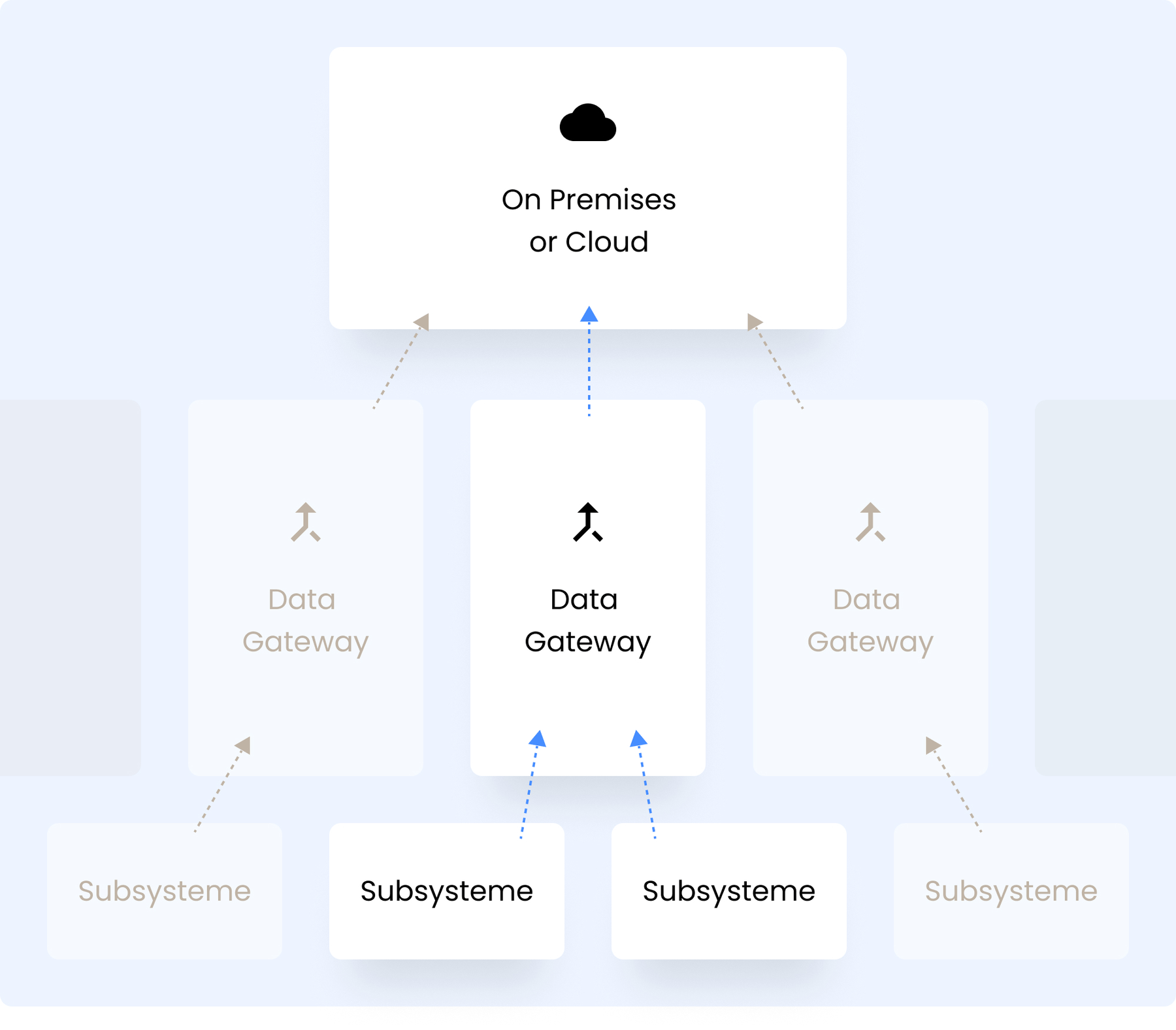
How do Edge Nodes work?
Edge Nodes are physically or logically located close to the data sources, e.g. in buildings or industrial facilities. They collect measurement values and status information from existing devices, process them locally, and then transmit them via supported interfaces (e.g. BACnet, Modbus or MQTT) to Eliona.
Edge Nodes can:
buffer data, to ensure secure and efficient transmission.
analyze and filter data, before they are forwarded.
In some cases even take over local control tasks (depending on the model).
Why are Edge Nodes used?
Edge Nodes are essential to enable a efficient, flexible, and scalable data processing in IoT systems. They offer numerous advantages:
Latency reduction: Data is processed locally, minimizing delays.
Efficiency: Only relevant information is sent to the cloud or central platforms such as Eliona, saving network bandwidth.
Fast response times: Actions can be triggered directly at the source without waiting for central systems.
IT security: Sensitive data stays local and does not need to be transferred to the cloud in full.
Example: Use in building automation
An Edge Node is installed in a building and connected to existing HVAC systems (heating, ventilation, air conditioning) via Modbus connected. It collects data such as temperature, humidity, and energy consumption, preprocesses them, and sends only the necessary information to Eliona. In Eliona, this data can:
be visualized to analyze trends.
trigger automations , such as adjusting ventilation parameters.
create alerts when threshold values are exceeded.
Last updated
Was this helpful?